


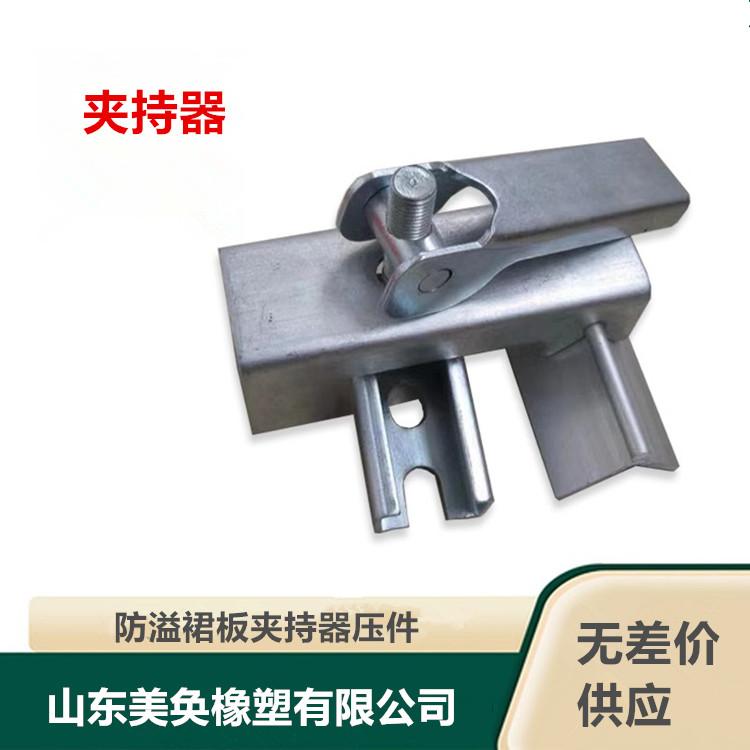
Anti-spill skirt panel fastener fixing clip holder supplied as a set, Meihuan.
Contact Info
- Add:Yanzhou District, Jining City, Shandong Province, Zip: 272000
- Contact: 臧明池
- Tel:13853748570
- Email:yzxyzmc@163.com
Other Products


Anti-Spill Skirtboard Fastener Fixing Clamp Holder Complete Set Supply Meihuan
The anti-spill skirtboard is a hot-vulcanized composite of polyurethane and rubber. To enhance the adhesion between the polyurethane and rubber of the anti-spill skirtboard, we employ mechanical treatment methods such as sandblasting and roughening for the polyurethane. As the sand particle size decreases, the bonding strength between the rubber and polyurethane increases. The more uniform the surface treatment of the polyurethane and the larger the surface area, the stronger the adhesion, thereby increasing the mechanical interlocking force between the polyurethane and rubber.
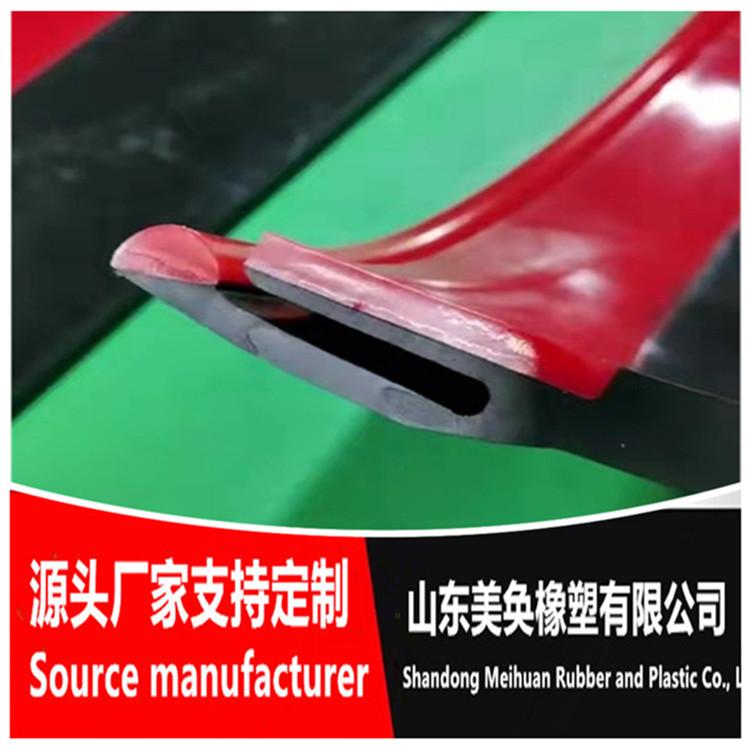
The hot-vulcanized bonding of the rubber and polyurethane in the anti-spill skirtboard is not only related to the bonding surface but also to the quality of the rubber material. Based on our years of experience, as the content of modified silica increases, the tensile strength of the rubber material gradually increases, while the elongation at break gradually decreases. However, from 40% to 45%, the increase in tensile strength of the anti-spill skirtboard rubber material is small, slow, and tends to approach the upper limit. This is because the more silica there is, the less its dispersibility in the rubber can be guaranteed, which instead affects the mechanical properties. The shear strength gradually improves with the increase in silica content, with a relative maximum value close to 4.0 MPa, showing a similar increasing trend as the tensile strength. Both result in cohesive failure of the rubber, indicating that the strength of the adhesive is higher than the cohesive strength of the rubber material, thereby improving the reliability of the hot-vulcanized bonding between the rubber and polyurethane in the anti-spill skirtboard.
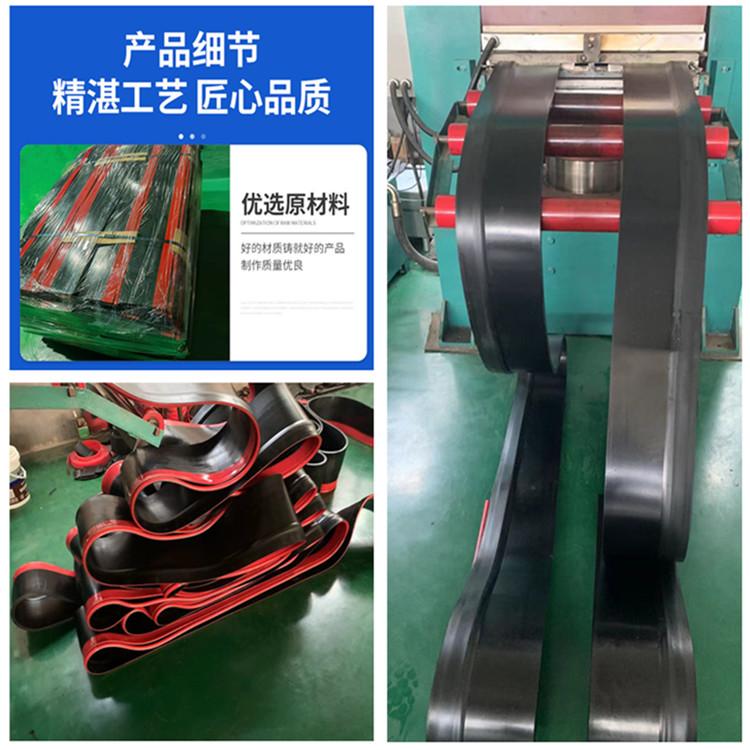
Main production steps of natural rubber anti-spill skirtboard:
1) Test the raw materials, including finished or semi-finished products such as raw rubber, miscellaneous standard rubber, additives, imported rubber, and traded rubber supplied by vendors, and store them uniformly by category.
2) Design the corresponding product formulation according to the requirements of different manufacturers and orders (which may also be based on national or enterprise standards), primarily tailored to the specific working conditions at each site.
3) According to the designed formulation requirements, mechanically cut the raw materials into small pieces of certain specifications for backup (mechanical cutting ensures more uniform mixing).
4) Feed the cut rubber materials into the open mill in the corresponding proportions as per the formulation requirements for stirring, mixing, and impurity removal processing.
5) The mixed rubber material has a relatively high temperature and needs to be cooled down to the optimal storage temperature before weighing and packaging.
6) The raw materials used for producing the anti-spill skirtboard must undergo strict visual inspection to prevent quality issues such as foreign objects and undercured spots, followed by quality re-inspection to check if the expected targets are met.
7) Place the re-inspected raw materials into the anti-spill skirtboard mold in appropriate quantities, then load them into the plate vulcanizing machine for hot vulcanization.
8) Inspect the finished anti-spill skirtboard, and package the qualified products according to the specific specifications required by the manufacturer.
The anti-spill skirtboard has sealing and wear-resistant properties, making it increasingly common in belt conveyors. A few days ago, a customer asked me: since the anti-spill skirtboard needs good wear resistance, why not use ceramic or other polymer materials?
Using metal materials for anti-spill skirtboards is not very suitable; other materials must be chosen, such as polymer materials, ceramic materials, etc. Polyurethane material is a type of polymer material with some superior properties in specific environments.
Listed below are some advantages of polyurethane for mining applications:
① Good corrosion resistance.② Good wear resistance.③ Good friction characteristics.④ High elasticity.⑤ Light weight, one-sixth that of metal materials.
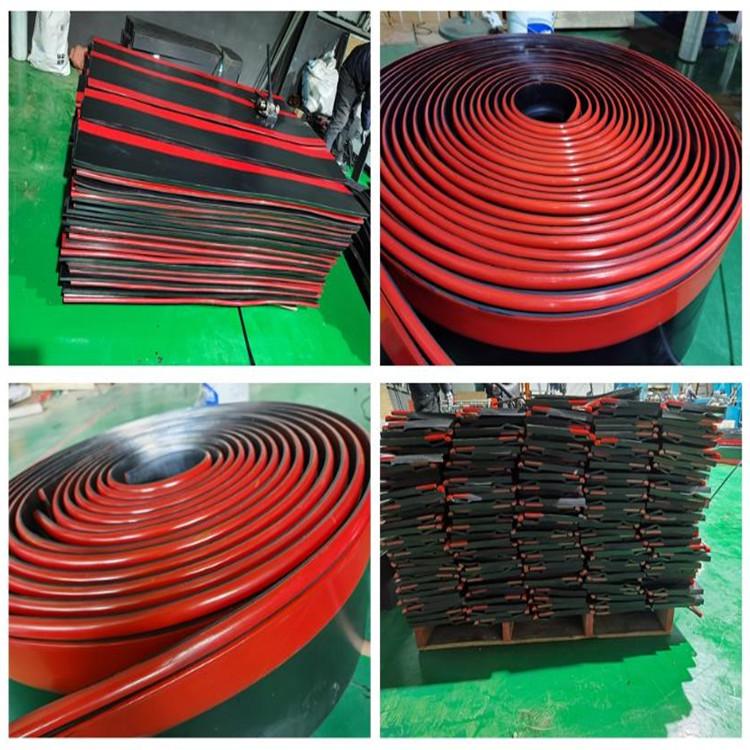
Polyurethane anti-spill skirtboards not only extend the service life of the liner but also, due to the polyurethane material, provide a certain degree of noise reduction, improving the working environment.
Using polyurethane anti-spill skirtboards is more conducive to reducing belt wear. Polyurethane material has a hardness between 60-90 Shore A and sufficient elasticity, with an optimal hardness of 85 Shore A.
Polyurethane is a polymer material介于 rubber and plastic. While possessing certain elasticity, it also has excellent wear resistance, temperature resistance, and tear resistance. Combining polyurethane with rubber to make polyurethane anti-spill skirtboards not only increases the wear resistance of the skirtboard but also mitigates the impact on the belt, thereby extending the service life of the anti-spill skirtboard. Incorporating rubber significantly reduces the cost of the anti-spill skirtboard, enhancing its market competitiveness.
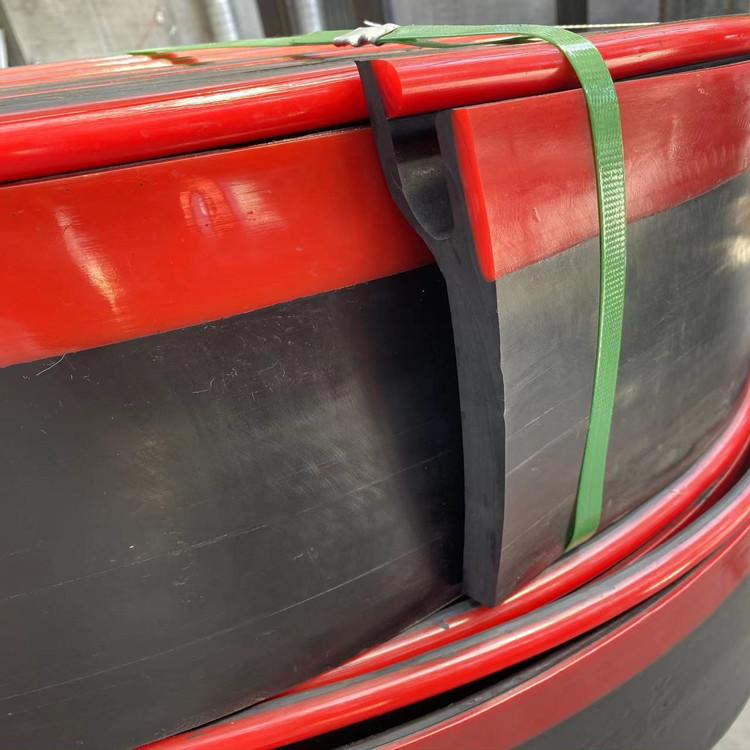
Industrial trials and long-term practical applications by customers have shown that using polyurethane material for anti-spill skirtboards has obvious advantages, being technically feasible and economically cost-effective.
For this reason, polyurethane anti-spill skirtboards are widely used in various major industries, such as coal mines, metal mines, thermal power plants, stone quarries, docks, ships, etc.
| Industry Category | Hardware & Tools/Fasteners & Connectors/Other Fasteners & Connectors |
|---|---|
| Product Category | |
| Brand: | 美奂 |
| Spec: | Y型 |
| Stock: | 999 |
| Manufacturer: | 山东美奂橡塑有限公司 |
| Origin: | 113708 |


